Returning Home: Culture, Courage, and the Crossroads of Identity in American Samoa
GenesisTauRichardson
Aug 20, 2025
3 min read
Updated: Aug 25, 2025
By Genesis Tau Richardson
Over a decade ago, I sat in a meeting with the Governor of American Samoa, surrounded by other recent college graduates and government leaders. I had just returned home after earning my bachelor’s degree in Hawaiʻi in 2010 and completing graduate school in 2013. Like many others before me, I came back hopeful — not to claim expertise, but to contribute in any way I could. I wasn’t the first to bring back knowledge and degrees from beyond the islands. But like many who returned, I found myself caught in a storm that had nothing to do with credentials and everything to do with culture.
That day, I spoke up. I said aloud what many had been saying in whispers - that the ineffective leadership in some government departments was failing our people. What made it newsworthy wasn’t the message, but the messenger. I was young. I didn’t hold a title. I was a woman. And I had addressed the very people we’re culturally taught not to question.
Soon after, my words were replayed on radio stations and published in local papers. What followed wasn’t just backlash, it was a reckoning. Community conversations exploded around whether youth, women, or untitled individuals had a right to criticize leadership. What began as a critique of performance quickly evolved into a deeper question: Do we, as a people, truly know how to balance our cultural reverence with civic responsibility?
Since then, I’ve lived through many seasons - professionally, personally, and spiritually. In 2014, I moved to California, where I spent nearly a decade growing as a woman, wife, mother, and advocate. I married a white American man and built a multicultural family. I deepened my passion for advocacy work, especially for vulnerable and marginalized communities. And through it all, I never forgot home.
Now I’m back.
I returned to American Samoa with my family and a new lens shaped by time, distance, and perspective. Today, I work in the Office of the Public Defender as its first law clerk - a role that grants me a front-row seat to both the human impact of systemic injustice and the deeply embedded cultural norms that often go unchallenged. I’m also still working toward my law degree and bar license. It’s not an easy road, but it’s the one I’ve chosen because I believe in a better way forward for our people.
Working in criminal defense has opened my eyes to the many ways our systems still fail us. I’ve seen how cultural silence, lack of legal awareness, and fear of challenging authority can leave people defenseless, even when the Constitution says otherwise. I’ve witnessed the consequences of a community where too many believe justice is reserved for the connected, not the deserving.
Efforts have been made, and I honor those who came before me, speaking out in their own ways and doing the hard work to push for progress. But we have a long way to go.
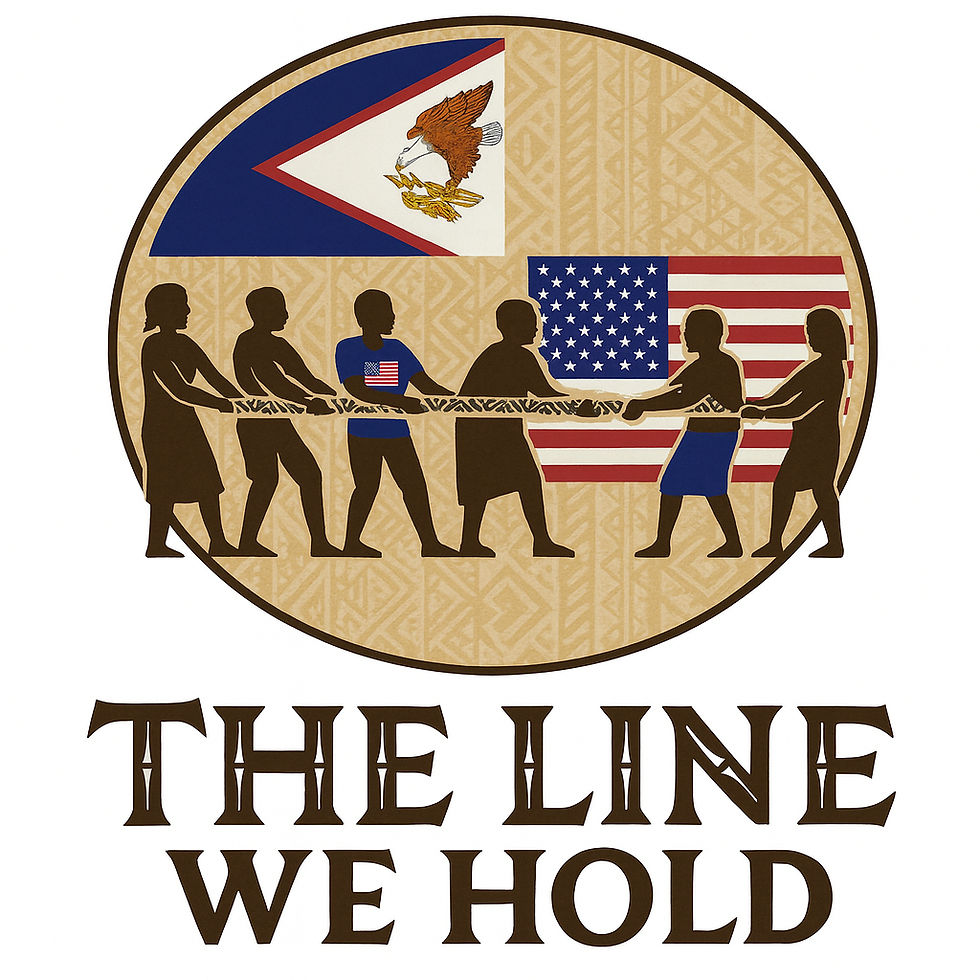
We are still wrestling with the same contradictions: we educate our youth in American systems that teach them to speak up, think critically, and lead. Then we return them to a culture that often rewards silence, seniority, and obedience. We want the benefits of modern governance but resist the transparency it requires. We talk about the importance of rights, but still tiptoe around who has the right to speak.
Now, raising children who are both Samoan and white, both rooted and foreign in this space, I carry a heavier sense of responsibility. How do I teach them to honor the beautiful values of fa'aSamoa - respect, community, humility - while also preparing them to navigate systems that require boldness, truth, and the courage to speak when others won’t?
This isn’t just personal. It’s generational.
Being back home isn’t just a return to place - it’s a return to purpose. I don’t speak today from youthful indignation. I speak with the clarity of lived experience and the quiet, unshakable conviction that our people deserve more: more access to justice, more culturally competent systems, more courage in leadership, and more grace in transition.
If American Samoa is ever going to thrive and not just survive, we must stop pitting culture against progress. The two are not enemies. But we do have to be honest about where one has been used to silence the other.
There is room for both reverence and reform. And I believe that the generation rising - the ones returning, the ones staying, the ones coming of age - are ready to build that bridge.




Comments