
The Cost of Avoiding Clarity: Accountability, Repair, and The Line We Hold


Something feels off.
While the island is bustling with lights, music, and celebration - while there is laughter, food, family, and the familiar rhythm of joy that usually grounds us at this time of year - beneath, there is an unease that is hard to ignore. An ominous weight hanging in the air. And I'm not talking about the trough to our south that the weather station noted tonight, or the flash flood warning it brings. This feels different. Heavier. More consequential. More carried... by people, by systems, by communities.
That weight became clearer after the last post - not because everyone agreed, but because people engaged. They challenged assumptions, sharpened boundaries, and named risks that are usually left unsaid. That kind of response doesn't come from comfort. It comes from tension that has been sitting unresolved for too long.
So let's be direct. Boundaries matter. Blurred lines in governance are not benign. They create confusion, invite misuse of authority, and erode public trust long before the damage becomes obvious. In American Samoa, this boundary has always mattered because fa'a Samoa defines who we are, and the law defines what we do. That distinction is not symbolic. It is structural. When it collapses, harm follows.
At the same time, pretending the line has not already been crossed does not restore clarity. It avoids responsibility. The line did not blur overnight, and it will not be restored by declaration alone. It eroded through repeated exceptions, convenience, silence, and authority exercised without sufficient accountability. Acknowledging that reality is not surrender. It is the only honest starting point for repair.
This is why I keep returning to the image of a dirty glass of water. We are not working with a clean slate. Our systems are already full. Of culture, law, history, obligation, loyalty, and lived experience. Pouring everything out is neither possible nor responsible. Repair requires something harder: deliberately introducing what restores balance - responsibility, transparency, consistency, empathy, and trust. Until what does not belong begins to dilute and fall away. That process is slower than many want, but it is how clarity returns without creating new harm.
This is not a culture-versus-law debate. Culture is not the problem. Law is not the problem. The problem is power operating without respect for boundaries, without accountability for impact, and without care for the people who absorb the consequences. When culture is used to shield authority from consequence, it is being misused. When law is applied without regard for lived realities, it becomes detached from justice. Both erode trust. Both weaken legitimacy.
This is where restorative justice matters. Not as a slogan, but as a discipline. It rejects punishment without repair and harmony without truth. It demands that harm be named honestly, responsibility taken directly, and systems adjusted so the same damage is not repeated. That approach is uncomfortable for both Western and Samoan instincts, precisely because it refuses easy exits.
What Repair Looks Like in Practice and What It Demands of Leadership
Repair in American Samoa will not come from seasonal goodwill or symbolic gestures. It will come from disciplined leadership.
Leadership accountability means clearly distinguishing when one is exercising cultural authority and when one is exercising organizational or legal power, and being transparent about that distinction. It means decisions are documented, standards are consistent, and exceptions are rare, justified, and visible. Ambiguity cannot be the operating system.
It also means leaders must stop displacing tension downward. When systems are unclear, staff absorb it. When accountability is inconsistent, communities absorb it. When leaders avoid hard conversations, the harm does not disappear. Instead, it spreads. Respectful leadership carries weight instead of shifting it.
Counterintuitively, repair also requires slowing down. Slowing decisions. Slowing reactions. Slowing the instinct to punish, protect, or perform decisiveness without understanding impact. In a small community, rushed enforcement can destabilize trust just as much as unchecked discretion.
Most importantly, leadership accountability requires a willingness to be examined - not privately, not selectively, but openly, fairly, and consistently. Authority without accountability is what blurred the line in the first place. Accountability grounded in respect, responsibility, and repair is how it is restored.
So as we move through a season meant to reflect care for one another, these are the questions worth sitting with:
What does leadership look like when respect is measured by action, not intention?
Who carries the cost when accountability is avoided—and who benefits?
How do we confront harm directly without abandoning our cultural values?
What would change if repair, not convenience, guided our decisions?
If we want trust, we have to build it deliberately. If we want clarity, we have to practice it consistently. And if we want leadership worthy of this community, we have to demand accountability - from institutions, from those in power, and from ourselves.
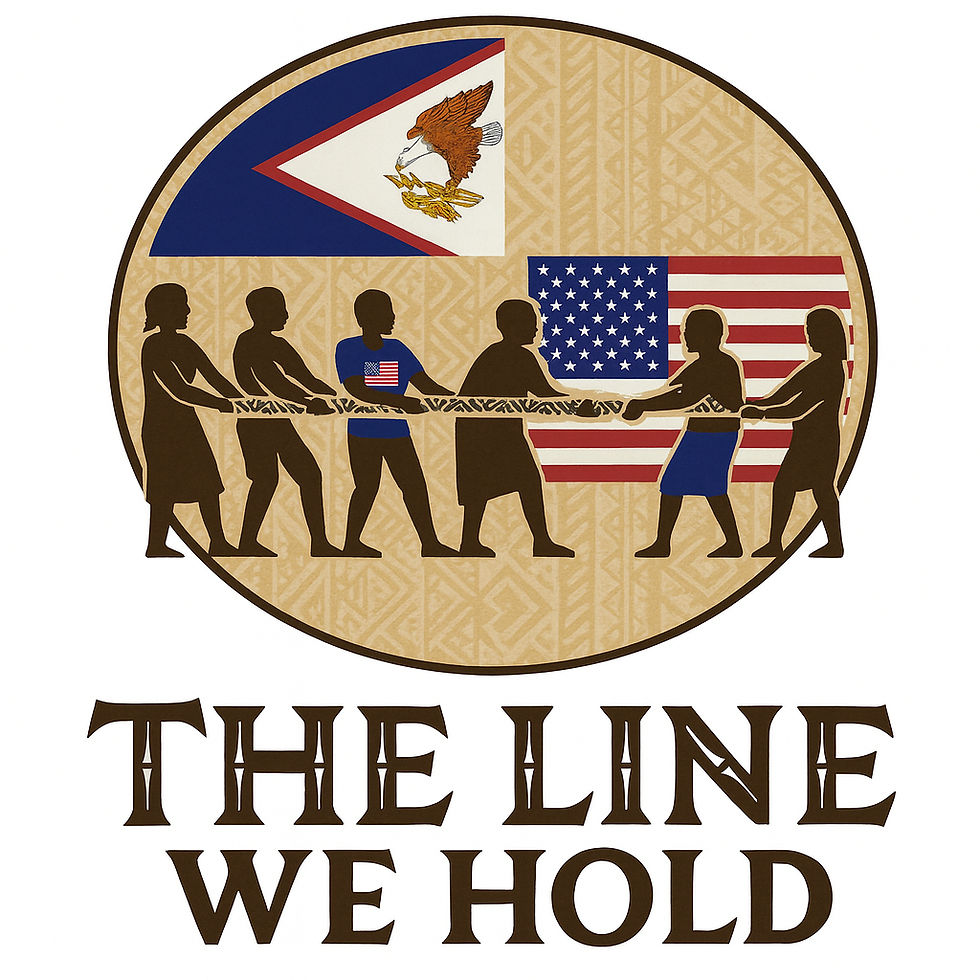
That is the line we are being asked to hold—especially now.


Comments